
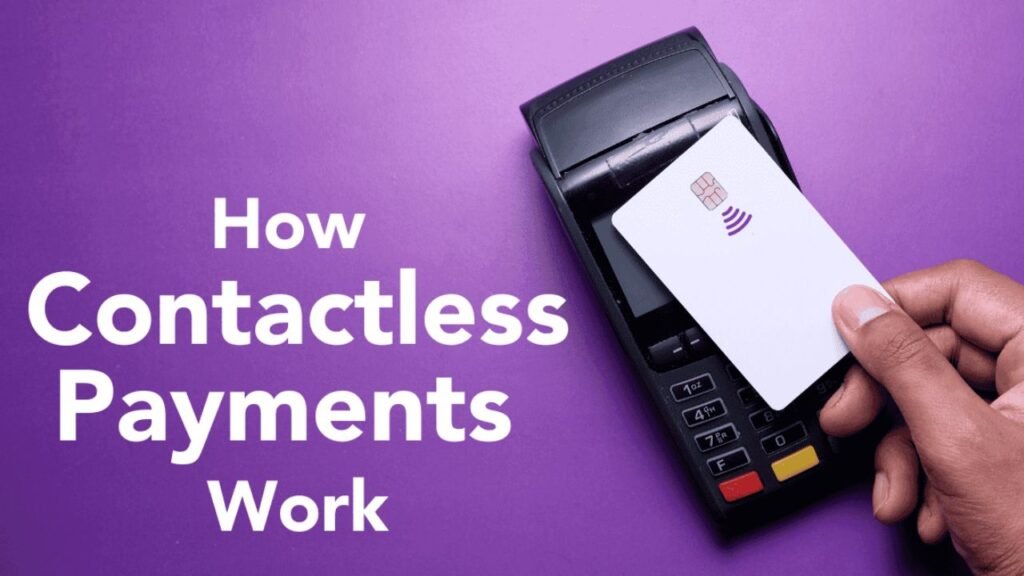
These days, entering a store, purchasing a cup of coffee, or paying for groceries doesn’t always mean paying with cash, swiping a card, or inserting a chip card. There are now a lot of customers out there who make the purchase by simply swiping a smartwatch, a payment credit card, or a cell phone on a payment terminal. This has fast-tracked the process of checkout, which has made people think in a different way regarding day-to-day transactions.
As more consumers and businesses turn to digital currency, it becomes quicker, easier, more convenient, and better adapted to today’s shopping lifestyle. To make purchases, people do not have to rely on conventional payment systems; now, technology is embedded in their cards and mobile devices, allowing them to make purchases within seconds.
Contactless payment is when people ask what a contactless payment is; they are asking about a payment that takes place without a card being inserted or swiped. The payments are made via wireless communication technology that securely transmits payment details from the customer’s gadget to the payment terminal.
What is a contactless payment and how does it work
Contactless Payment: a method of paying for goods and/or services through a non-touch mechanism with a reader. Rather than inserting a card into a machine, users wave their contactless card, mobile phone, or wearable device near a contactless terminal.
Near-field Communication (NFC) is used by most contactless transactions. This technology enables two close-range devices to communicate with each other using encrypted information over a very short distance. NFC is the same technology that enables lots of smartphones and smartwatches to communicate with electronic wallets for spending.
The process typically takes place in a few easy steps:
- The customer waves or swipes a contactless card or device in front of the payment terminal.
- The communication between the card or device and the terminal occurs via the NFC chip embedded in the card or device.
- Securely send payment information for approval.
- The payment network verifies the transaction.
- The customer is notified that the purchase is confirmed.
It’s a few seconds cover-to-cover, and that’s why tap-to-pay is popular at grocery stores, restaurants, public transportation, shops, etc., where it counts.
Contactless technology does not transmit payment data in repetition as do traditional magnetic stripe cards. Many systems, however, do not; they send encrypted data instead and use tokenization, in which sensitive card information is scrambled with a digital identifier to make the information more unrecognizable to the consumer.
Why are contactless payments becoming more popular?
The biggest reason behind the growth of contactless payments is convenience. Consumers of today’s time would like to see a payment method that seamlessly fits into their lifestyles. With the convenience of carrying a pesky wallet now a distant memory, and a smartphone or smartwatch able to carry the payment information, carrying a physical wallet is no longer the only solution.
Some key benefits to customers are:
Swiping a card or phone is better for faster checkout as opposed to counting cash or using a chip card.
- More convenience: Individuals are able to pay with something they carry every day.
- Reduced physical interaction: Customers are able to pay at counters without as much interaction with physical units.
- Flexible payment: Users can opt for either a card, a mobile wallet, or a wearable.
Contactless payments are also an asset to businesses. Quicker transactions can help shorten checkout lines and enhance customer experiences, particularly during peak hours. Enhancing payment methods, such as providing additional payment options, can smooth out the process for restaurants, small retailers, and service providers.
Contactless payments can also be a way to satisfy the evolving needs and demands of consumers for small businesses. Consumers are increasingly used to having the option of online payment and demand it as part of customer service options.
Different types of contactless payment methods
There is more than one technology when it comes to contactless payments. Depending on the device, bank, and consumers’ preferred payment method, there are several options.
Contactless credit and debit cards
Many smart credit and debit cards come with integrated NFC chips in them, for example, enabling people to tap their cards to compatible terminals. These cards typically feature a contactless logo which has a sort of curling pairing of wireless waves.
Similar to the act of inserting a card but without having to insert the card into the reader. It’s actually among the most convenient approaches for consumers to start utilizing contactless payments.
Mobile wallet payments
Mobile wallets are the ones that enable managing payment cards securely on mobile devices, such as smartwatches and smartphones. Carmel’s Chip cards are popular options include Apple Pay, Google Wallet, and Samsung Wallet.
Customers use authentication technology like Face ID, fingerprint ID, or a passcode when purchasing. The device then sends a message to the payment terminal to finalize the transaction.
QR code payments
Scanner systems to support some contactless payments utilize QR codes rather than NFC. Customers open the camera on their smartphone and scan a code, and then use the payment app to confirm it.
QR payments might be helpful for companies that do not wish to invest in advanced payment equipment but would prefer easy contactless payment.
Are contactless payments safe and secure?
One of the most frequently asked questions regarding contactless transactions is about security. Some consumers are concerned it might be easier to steal financial information from them if they touch a card or phone. But contactless payments involve various layers of security measures.
An important security feature is called tokenization. The system generates a unique code or token to represent the transaction instead of passing the true card number in each transaction. That info by itself can’t be used to make a second payment if somebody copied it.
Mobile wallets use device authentication for extra security. To approve the payment, a customer might have to confirm his or her identity with a device passcode, fingerprint, or facial recognition.
The short communication range of NFC is another security benefit! It decreases the possibility of unwanted communication at a distance between the devices, as they need to be very near to communicate with one another.
It is still best practice for users, however, to practice basic computer security:
- Use robust passwords to safeguard smartphones.
- Activate tracking functions on devices.
- Report lost cards or devices quickly.
- Check bank statements periodically for any suspicious activity.
While contactless technology creates a more secure payment experience, it’s important to make sure its use is appropriate to personal finance in the same way.
How businesses can start accepting contactless payments
Usually, it requires a payment terminal capable of operating it, or a mobile payment app that is supported by businesses. Many of the modern PoS systems support NFC.
Setting up typically requires:
- Selecting a payment processor with support for contactless payments.
- Association with a Payment Terminal or other compatible device with NFC.
- Opening a business payments account.
- To test transactions prior to receiving payment from customers.
Small business operators can also opt for payment methods involving a smartphone, which enables some smartphones to take tap payments without a need for standard card readers. This can facilitate mobile businesses, independent sellers and service providers to receive digital cash payments.
Use ofcontactless’ payment is generally simple for customers. All they need is a card or device that is approved for this feature, a terminal that is compatible with the card or device, and an account through which to pay.
Frequently asked questions
1. Do contactless payments require internet access?
For most of the contactless card transactions, an internet connection may not be required on the customer’s phone at the time of using the card. But for some, the digital wallet/payment application might require an internet connection for setup, updates, or some security checks.
2. Can contactless payments be used with a smartphone?
Yes. NFC phones are capable of contactless payments via an app in a digital wallet, if the app is accepted. It allows users to upload their card to it, confirm their details, and use their phone to pay at payment terminals that support payment by phone.
3. Are contactless payments safer than swiping a card?
Due to the fact that contactless payments utilize encrypted communication and also transaction-specific data, they normally come with much more robust security attributes than standard magnetic stripe payments.
4. What happens if I lose my contactless card?
Immediately report the loss of a contactless card to its issuing company. Banks typically offer fraud protection features and are able to reverse any transactions that are not authorized.
5. Do all stores accept contactless payments?
No. Any store that accepts tap payments is required to have a contactless-enabled payment terminal on-site. But it’s something that more businesses are now incorporating with the increasing use of the internet to pay.
Conclusion
Contactless payments have revolutionized the way people do transactions by making everything more convenient, faster, and simpler for everyone, whether the consumer or the customer. These technologies enable such payments to be made using technology such as NFC, encryption, and digital wallets, offering a modern alternative to traditional card payments with robust security measures.
Contactless payment will be increasingly adopted as a routine part of daily transactions as more people get accustomed to their smartphones, wearable gadgets, and digital banking.