
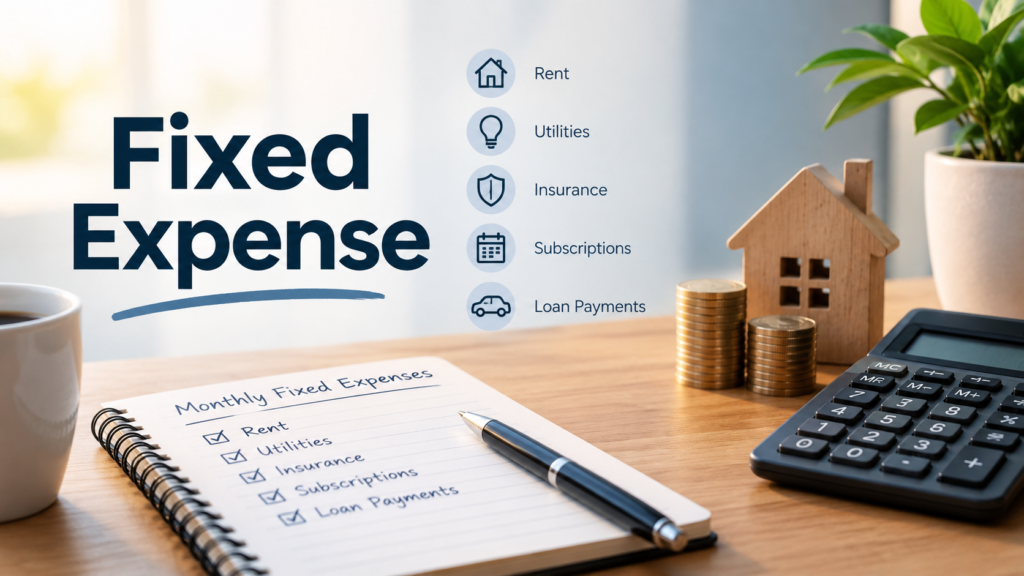
When you know where your money goes each month, you will find it easier to manage your finances. While cutting a day-to-day expense is important, it is essential to pay attention to recurring expenses, as they can have the greatest effect on financial stability. Understanding your predictable costs can help you budget for the future, avoid late payments, and establish a realistic budget.
The first step in creating a good budget is to first create a list of expenses that must be paid on a schedule so you can determine how much money can be put towards savings, fun, or other objectives. Predictable costs are the preamble of personal finance planning because they tend not to vary commonly.
Fixed Expenses are the regular costs that do not tend to fluctuate over a specified time, as you can predict and plan your monthly expenses. These costs can be used to calculate how much money you need to pay for your house, insurance, and other expenses to see how much you can afford.
What Is a Fixed Expense and Why Does It Matter?
It will help make the process of money management easier if you know where money is going every month. While cutting expenses for a day or two is usually the obvious solution, bills that are set to recur will make a huge difference in a person’s financial situation. Being aware of which expenses are predictable can help you to plan ahead, prevent late payments, and craft a real spending plan.
To have a tight budget, you will need to first determine what bills are necessary to be paid regularly each month, and then determine how much can be saved, spent on entertainment, or spent on the various goals that you have in mind. Predictable expenses are ones that happen and typically do not change often and, as a result, are a key component of personal financial planning.
A fixed cost is a regular cost whose value is fairly constant over a given time frame, making it easier to predict your monthly cash flow. There are various items, like payments for housing, insurance, etc., that give you an idea of your financial obligations and how flexible with your finances you are.
Common Examples of Fixed Expenses in Everyday Life
Fixed expenses differ with individual peoples as based on people have varying financial obligations and hence, fixed expenses differ from person to person. There are a number of categories that can be found with regularity in household budgets, however.
Housing Costs
Most households’ biggest fixed expense typically is for housing. This may include:
- Monthly rent payments
- Mortgage payments
- Homeowners association fees
- In some property tax systems (see taxonomy)
- Home insurance premiums
Housing is also a significant factor in people’s financial flexibility, since it typically involves long-term financial commitments.
Transportation Payments
Another bill that can follow a predictable pattern each month is the transportation bill. Examples include:
- Auto loan payments
- Car lease payments
- Vehicle insurance
- Public transportation passes
Essentially, the cost basis for the ownership or leasing of an automobile is often constant while expenses for fuel and maintenance are variable.
Insurance Premiums
Another frequently used category is insurance. There are many people who have premium auto insurance payments:
- Health insurance
- Auto insurance
- Home insurance
- Renters insurance
- Life insurance
Premiums are not set to rise over time, but rather can, in most cases, be forecasted fairly accurately and built into a regular budget.
Subscription Services and Memberships
Digital household expenses can cause additional burden in the household budget, and so can be the repetitive expenses related to lifestyle, including the following:
- Streaming platforms
- Gym memberships
- Software subscriptions
- Phone plans
- Internet services
While these costs are relatively low per account, they can quickly become hundreds of dollars for a person’s annual expenses from a number of accounts.
Fixed Expenses vs Variable Expenses
Fixed costs vs variable costs is one of the most valuable budgeting techniques. Fixed expenses are expenses that rarely, or at best, vary with consumption, habits, or circumstances, whereas variable expenses vary more often in accordance with consumption, habits, or circumstances.
Variable costs can include:
- Groceries
- Gasoline
- Restaurant meals
- Clothing purchases
- Entertainment
- An actual expenditure basis for utility bills.
For example, your rent might be consistent – $1800 a month – but your groceries may be $400 one month and $550 another.
The biggest difference is predictability. Fixed costs are predictable as they are factors that you should expect. Variable spending calls for more monitoring as it is dependent on choices made and changing requirements.
With fixed costs, however, there comes flexibility too. In many instances, an individual can decrease certain reimbursable amounts by altering service providers, refinancing loans, negotiating prices, or canceling services that are unneeded.
A smart budget isn’t just about keeping track of spending; it’s about making sure all of your spending falls within your financial objectives.
How Fixed Expenses Affect Your Monthly Budget
Fixed costs are what give you financial freedom in your month. When you’re spending a significant piece of your budget on these types of bills, you can get caught up in some surprising bills.
Suppose, for instance, that somebody has a post-tax income of $4,500 per month. Their expenses include:
- Rent: $1,700
- Car payment: $450
- Insurance: $250
- Phone and internet: $150
- Student loan payment: $300
The total amount they spend on a recurring basis is $2,850. This means that one has $1,650 remaining to pay for food, savings, transportation, entertainment, emergency expenses, and other needs.
This is a pretty telling example of why it is vital to keep track of recurring expenses. Someone might look like they are making money, but if they have large monthly bills, this means that they may not have money to put aside or cover emergencies.
Many financial professionals would not recommend considering these expenses a fixed cost and will recommend reviewing them often. Even saving on one of the larger, regular bills can add up in the long-term.
For example, if a monthly reduction of $100 is made, this could increase his savings to $1,200 per year. Additions of regularly recurring expenses can make a difference in the long term.
Ways to Reduce Fixed Expenses Without Hurting Your Lifestyle
It would be easy to think that fixed costs are something that can not be altered, but this is not the case, as there are a number of ways in which fixed costs can be reduced.
Review Your Subscriptions
Receiving the bill is so habitual that subscription charges are very easy to get lost in pride. Shop around for services each month and cancel services that you don’t use regularly.
Eliminating several unused items such as a streaming service, the subscription for a certain app, or a lost membership may seem inconsequential, but a once-and-always subscription to services can cause unwarranted spending.
Negotiate Bills and Compare Providers
There may be bills that are outstanding that you can renegotiate. Talk to the service provider to see if they can offer a cheaper rate, a promotion, or if there are any discounts available.
This method could be used with:
- Internet services
- Insurance plans
- Mobile phone providers
- Certain memberships
Every other time of the year can be worth comparing options to prevent overpayment.
Consider Refinancing or Changing Debt Terms
Often, loan payments can be one of the biggest fixed expenses. Refinancing can lower your monthly payments or costs of borrowing, depending on your financial situation and your choices.
But before making any changes to loan agreements, always make sure to look at the long-term effects.
Reduce Housing Costs if Necessary
Your home can make a big impact on your finances. Others save money by relocating to a more suitable area, getting a roommate on board, or altering their living situation.
Making a change to your home is a big decision, but it can be the biggest savings opportunity!
How to Build a Budget Around Fixed Expenses
When it comes to setting up a budget, having various categories to sort the money goes a long way towards making the process easier.
First, work out what you make per month after taxes. Then note all accounts that you pay regularly, such as mortgage, car loan, car insurance, auto payments, auto finance, etc.
Once you have these costs, determine your average expenses, and add the variable costs on. Looking back at old bank statements can help get realistic forecasts.
There are several simple steps to the budgeting process:
- Find the amount of money you make each month.
- Compile a list of the occasions or activities where expenses recur.
- Make the distinction between fixed and variable expenses.
- Identify unnecessary costs.
- Set savings goals.
- Check your budget on a regular basis.
The 50/30/20 rule is followed by many people who divide their basic Stages of Life requirements, their wants, and their financial savings. The percentages are dependent upon the individual, but at times the fixed costs may fall under the needs category.
The idea is not to have a perfect budget; it’s about having a system that allows you to make smarter choices with your money.
Frequently Asked Questions About Fixed Expenses
What is the main purpose of tracking fixed expenses?
By keeping track of the recurring costs, you’ll get a clearer picture of your financial commitments, and you’ll know how to free up a portion of your finances for savings, investments, and flexible spending.
Is rent considered a fixed expense?
Yes, rent is generally regarded as an expense since it does not go up or down that often.
Can a fixed expense change over time?
Yes. Fixed expenses are relatively easy to forecast but can rise or fall for a variety of reasons, including changes in the contract or alterations in either the rate or provider.
Are utilities fixed or variable expenses?
The majority of utilities are variable, as they change depending on how much is utilized. Some plans might be on a fixed price per month, though.
Are subscriptions considered fixed expenses?
As subscriptions are paid on a regular basis and at a set amount, then yes, they are likely to become a fixed expense.
Conclusion
Understanding your recurring financial obligations is one of the most important steps toward building a healthy budget. Fixed expenses provide structure because they show the costs you can expect each month, allowing you to plan your spending and savings more effectively.
While these expenses are often predictable, they should still be reviewed regularly to find opportunities for improvement. By managing recurring costs carefully and balancing them with flexible spending and financial goals, you can create a budget that supports both your current lifestyle and your future plans.
For More Information Click Here